


Part of our Drainage in Colorado Springs guide.
If part of your yard stays soggy for days after a storm, or water collects against the house every time the snow melts, you have a drainage problem. The two most common fixes are regrading the ground and installing a French drain. They solve different problems, and they cost very different amounts, so it pays to know which one your yard actually needs before you call anyone.
Start With Where the Water Goes
Every drainage fix begins with one question: is the water running across the surface, or moving underground? Next time it rains hard or a snowbank melts, walk the yard and watch.
- Water sheets across the lawn toward the house and pools against the foundation or in a low corner. That is surface water, and the ground is sloped the wrong way.
- The ground looks level and well shaped, but a patch stays saturated long after the rain stops, or water seeps into the basement even though nothing is pooling outside. That is water moving below the surface.
Many Colorado Springs yards have some of both. Clay soil, which is common across the area, drains slowly, so water that should soak in runs off instead, and water that does soak in tends to linger.
When Regrading Is the Fix
Regrading reshapes the soil so water flows away from the house and toward a safe place to go, such as the street, a swale, or a dry creek bed. It is the right answer when the problem is the slope itself. Signs your yard needs regrading:
- Soil has settled next to the foundation, so the ground now tips toward the house.
- Water collects in the same low spots on the lawn after every storm.
- Downspouts empty onto ground that runs back toward the walls.
Grading-only work is usually the simpler and less expensive of the two fixes, and it is often finished in a day. Pairing it with buried downspout extensions solves a surprising number of wet-basement complaints on its own.
When You Need a French Drain
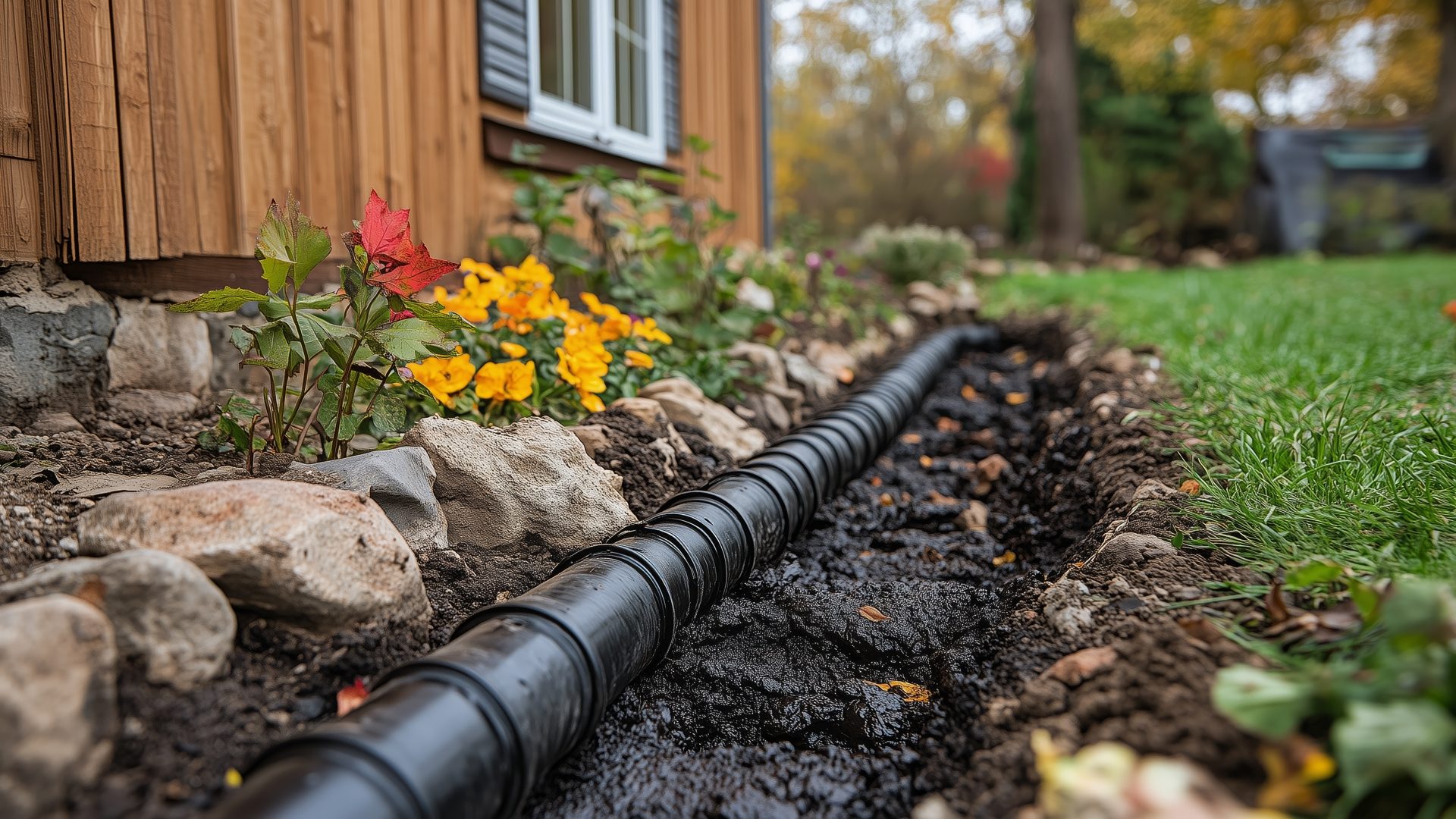
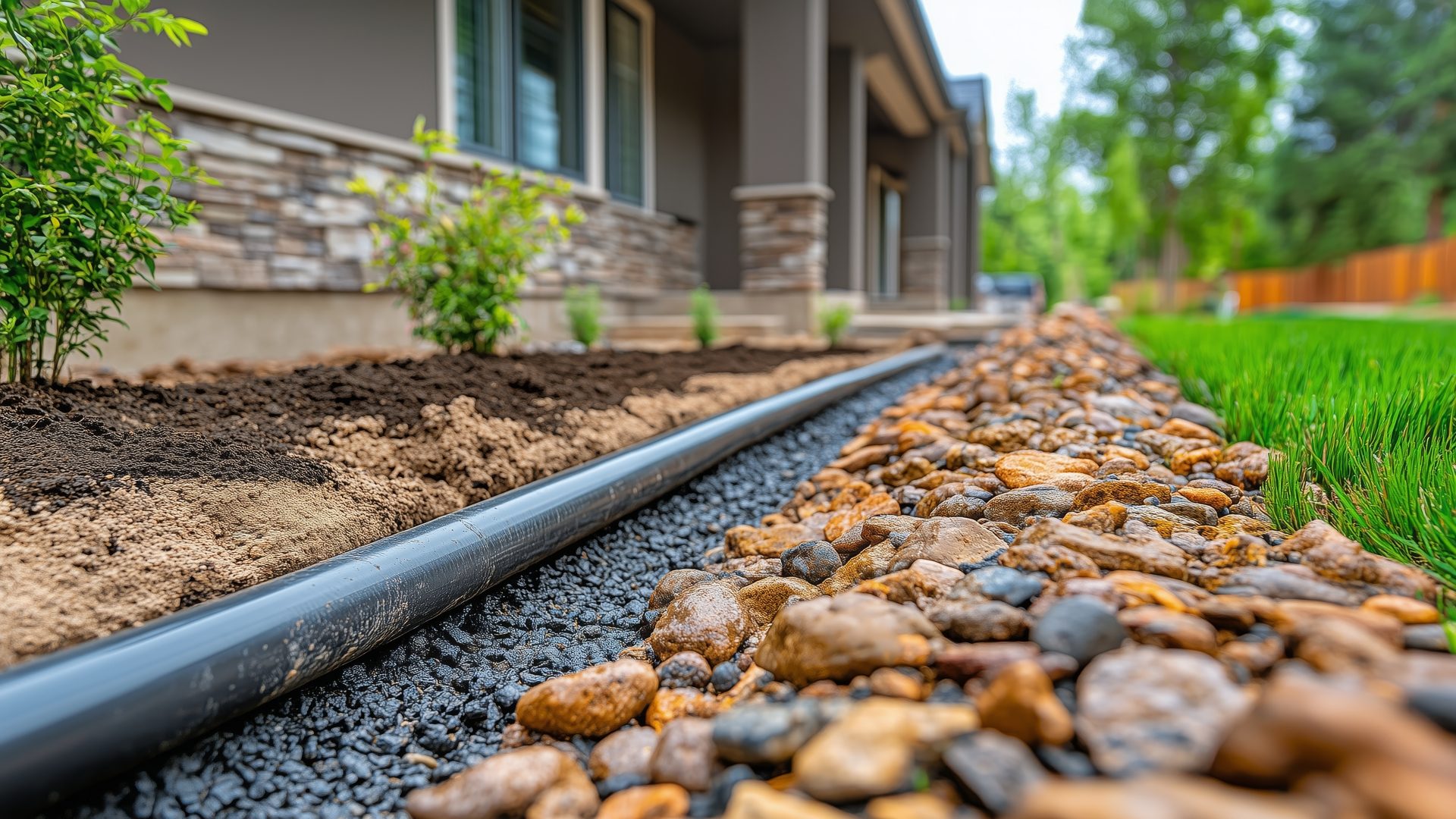
A French drain is a trench with a perforated pipe in a bed of gravel. It collects water below the surface and carries it to a discharge point. It is the right answer when the ground is already shaped correctly but water is still moving through the soil where you do not want it. Signs you need one:
- A strip of lawn stays wet or spongy for days, even though it is not a low spot.
- Water comes from uphill, including from a neighbor's property, and soaks through your yard.
- The basement takes on water during snowmelt even though the surface slopes away.
French drains take more digging than regrading, so they cost more, but they handle water that no amount of reshaping the surface can reach.
Why It Matters Before Winter
In Colorado Springs, a lot of basement and foundation problems show up in late winter and spring, when snow melts during the day and refreezes at night. Water that sits against a foundation through that cycle soaks in, freezes, and expands. Fixing drainage in the fall, while the ground is still workable, means the system is in place before snowmelt season starts, instead of fighting frozen soil in January. Our fall drainage checklist covers the quick checks worth doing now.
Other Fixes Worth Knowing About
- Dry creek beds and swales carry surface water across a yard in a way that looks like part of the landscaping.
- Catch basins collect water at a low point and send it into a buried pipe.
- Window well drainage stops wells from filling up and leaking into the basement.
Not Sure Which One You Need?
A site visit usually settles it in a few minutes, because the slope, the soil, and the stains on the foundation tell most of the story. We have fixed drainage across Colorado Springs since 1996. See our drainage services in Colorado Springs, or call 719-572-1768 for a free estimate.