


Part of our Drainage in Colorado Springs guide.
Drainage problems rarely announce themselves all at once. They show up as small signs that are easy to ignore until a wet spring or a heavy snowmelt turns them into a flooded basement. Here are seven warning signs we see in Colorado Springs yards, what each one usually means, and what to do about it.
1. Puddles That Last More Than a Day
A puddle after a storm is normal. A puddle that is still there a day or two later is not. It usually means the ground in that spot is lower than the area around it, or that clay soil underneath is not letting the water soak in. Small low spots can often be fixed by regrading; larger ones may need a catch basin or a drain line.
2. Water Pooling Against the Foundation
This is the one to take seriously. Soil next to a house settles over the years, and once it tips toward the walls, every storm sends water straight to the foundation. In Colorado Springs, that water can freeze and thaw against the walls all winter. Regrading the soil so it slopes away from the house is usually the first fix.
3. Downspouts That Empty Next to the House
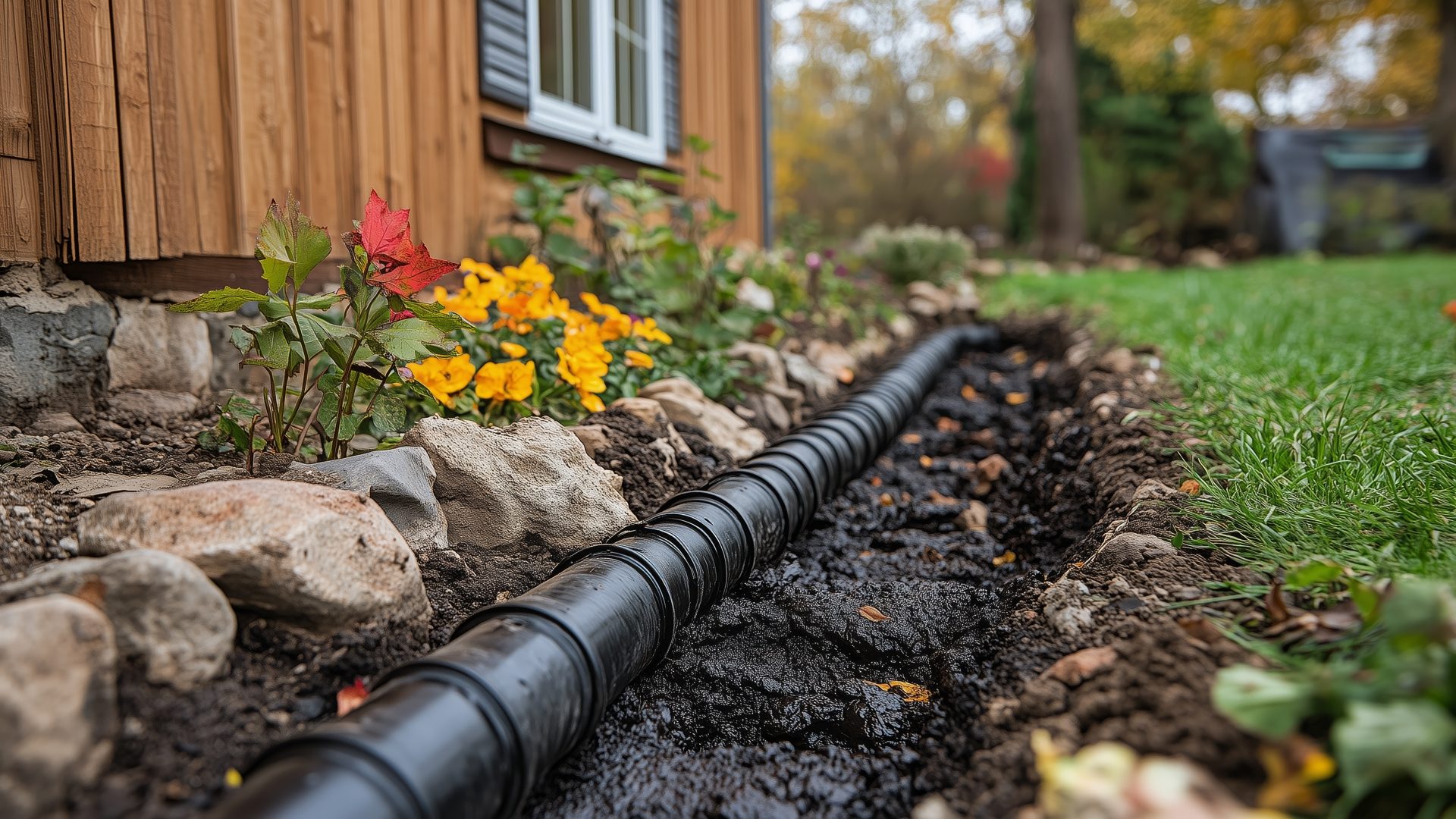
A roof sheds a lot of water. If the downspouts drop it right at the foundation, or onto ground that runs back toward it, the water ends up in the same place it came from. Buried downspout extensions carry it far enough away to stop being a problem.
4. Window Wells That Fill With Water
Window wells sit below the ground surface, so they collect whatever water reaches them. If yours fill after storms or during snowmelt, water is either running toward them across the surface or reaching them through the soil, and leaks into the basement are next. Window well drainage, plus regrading around the wells, fixes most cases.
5. A Musty Smell or Damp Spots in the Basement
A basement that smells damp after storms, or shows water stains low on the walls, is often the first sign of a problem outside. The cause is usually one of the other signs on this list. Fixing the water outside is almost always cheaper than dealing with what it does inside.
6. Erosion, Washed-Out Mulch, and Exposed Roots
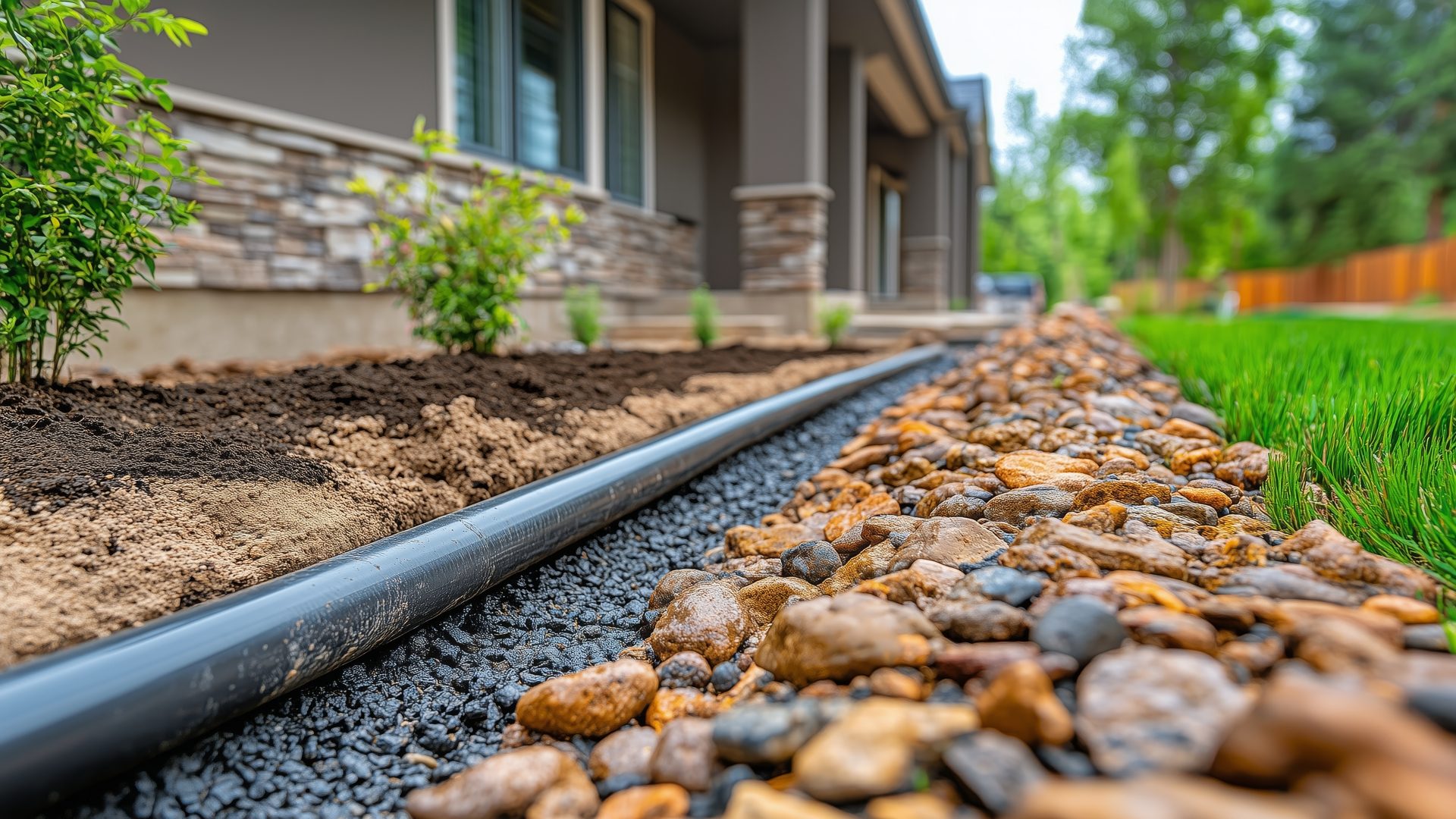
When mulch and soil wash across a walkway after every storm, or gullies form in beds and slopes, water is moving fast across the surface. Dry creek beds, swales, and terracing slow it down and send it where it can do no harm, and they can look like part of the landscaping.
7. Cracked or Heaving Walks and Patios
Concrete and pavers crack and lift when the soil under them stays wet and then freezes. If a walk or patio near the house keeps shifting, poor drainage beneath it is a likely cause. Fix the water first, or the new concrete will crack the same way.
What to Do Next
Start by watching your yard during the next storm or snowmelt and noting where water collects and where it comes from. That alone narrows down the fix. Our guide to choosing between a French drain or regrading explains the two most common solutions.
Fall is the best time to act: the ground is still workable, and a fix now is in place before snowmelt season. Affordable Services has handled drainage in Colorado Springs since 1996. See our drainage services in Colorado Springs, or call 719-572-1768 for a free estimate.