






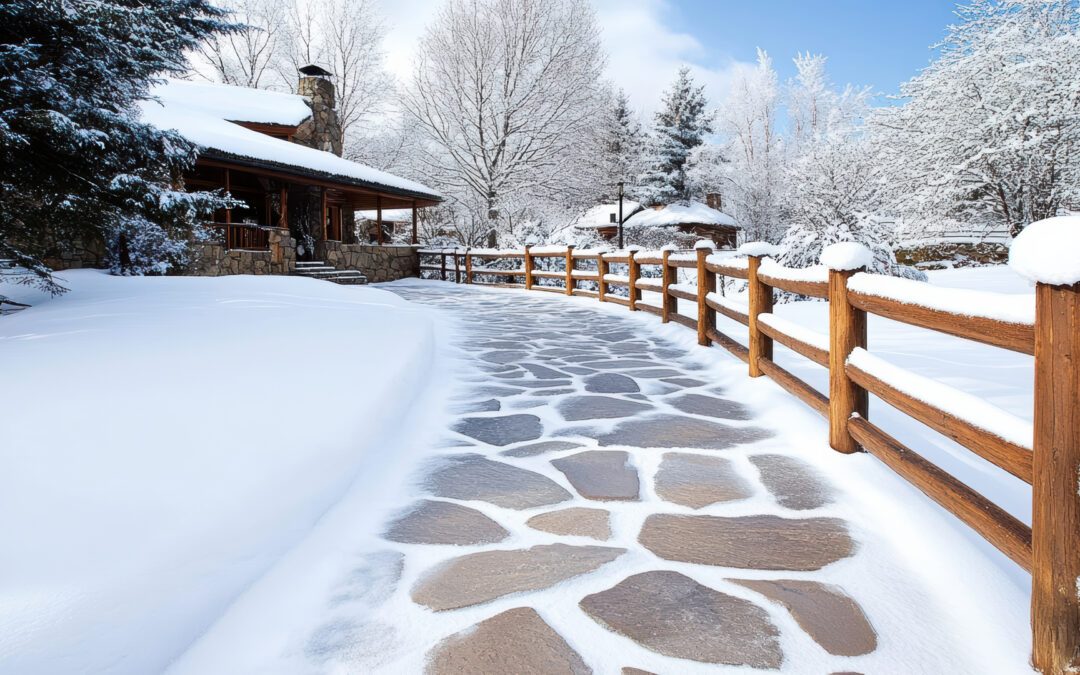
Colorado Springs winters bring beautiful snowy views, but they also bring a unique challenge to outdoor living spaces. Between rapid temperature swings and moisture that melts and refreezes, stone and concrete features take on more stress than most homeowners realize. Without proper care, patios, pathways, and retaining walls can show cracks, shifting, and structural wear before spring even begins.
The good news is that preventive steps taken in late fall and early winter can significantly extend the life of your investments. When you understand how freeze–thaw cycles work, it becomes easier to protect the hardscapes you enjoy year-round.
Why Freeze–Thaw Damage Happens in Colorado Springs
At high altitudes, temperatures often rise above freezing during the day and drop sharply overnight. When water seeps into joints, small cracks, or porous stone, it expands as it freezes. That expansion puts pressure on the surrounding material, widening gaps and loosening stones. Over the course of the winter, this cycle repeats again and again.
Patios and paths in Colorado Springs also experience dry conditions followed by sudden snow or ice. This constant change can wear down even well-built surfaces if they do not receive seasonal maintenance.
Keep Moisture Out of Cracks and Joints
Start by looking for minor cracks or gaps before heavy snowfall arrives. Filling joints with polymeric sand helps block water from settling in and causing expansion damage. For retaining walls, check areas where stones may have shifted or where the soil has settled unevenly behind them.
Clearing fall debris from paver joints and around the base of hardscape structures is another small step that prevents moisture from becoming trapped. Leaves and soil that sit against stone create pockets where ice can form.
Ensure Proper Drainage Around Hardscapes
Standing water is one of the biggest threats during winter. When meltwater has nowhere to go, it sinks into materials meant to stay dry. A simple inspection can reveal low spots where water pools after snow begins to melt.
If you notice soggy areas along pathways or near retaining walls, adjusting grading or adding gravel to improve drainage can make a big difference. Proper downspout placement also keeps water from flowing directly onto patios or walkways.
Choose Materials Meant for Mountain Weather
If you are considering upgrades or new additions, keep Colorado’s winters in mind. Materials labeled freeze-thaw resistant offer better long-term durability. Pavers and natural stone installed with flexible base layers are less likely to shift during colder months.
Retaining walls with proper reinforcement are also built to withstand pressure changes that occur when soil expands and contracts. These design choices help structures stay strong even in unpredictable conditions.
Clear Snow Gently and Regularly
Keeping snow from accumulating reduces the amount of meltwater that seeps into any vulnerable spots. Using a plastic shovel instead of a metal one prevents scratches that could become larger cracks over time. For icy areas, traction materials like sand or crushed stone are safer for hardscapes than chemical deicers, which can weaken surfaces over time.
Even during milder winter stretches, quick touch-up maintenance keeps small problems from growing into major repairs by spring.
Your Outdoor Spaces Deserve to Last
Colorado Springs homeowners rely on their outdoor spaces for relaxation and function, even in the colder months. With a few proactive steps, you can help stone pathways stay level, retain walls remain strong, and patios look beautiful well beyond the winter season.
Staying ahead of freeze–thaw damage is one of the smartest ways to protect the outdoor features you love. And when you plan ahead for seasonal care, your yard will be ready for whatever Colorado weather brings next.
